
Soil And Water
The Soil and Water Department plays a crucial role in promoting sustainability in the agricultural sector by ensuring the responsible management of natural resources. Through activities such as soil conservation, water resource planning, erosion control, and irrigation management, soil physics, soil chemistry, soil microbiology, the department helps maintain soil health and optimize water use. This, in turn, enhances crop productivity, supports environmental protection, and ensures long-term food security. Soil and Water Department was established in 2005 in Agriculture College, Salahaddin University-Erbil. The staff of the department are included 7 Assistant Professors, 10 Lecturers, 28 Assistant Lecturer. Student graduated every year about 30 student. The core function of the department including; Soil and Water Conservation (Preventing soil erosion through contour plowing, terracing, and cover cropping, Monitoring soil health and promoting soil enrichment techniques, and Managing land use to prevent degradation and desertification). Water Resource Management (Promoting efficient irrigation systems (e.g., drip irrigation), Protecting watersheds and maintaining wetlands, and Monitoring and improving water quality in collaboration with environmental agencies). Soil Chemistry (Analyzing soil chemical properties—such as pH, salinity, cation exchange capacity, and nutrient availability—to guide soil management, improve fertility, and support sustainable crop production. Soil Microbiology and Sustainable Agriculture (Investigating the role of soil microbes in nutrient cycling, organic matter decomposition, and soil structure improvement. Encouraging the use of beneficial microbes e.g., nitrogen-fixing bacteria, mycorrhizal fungi in agriculture to boost nutrient uptake, reduce plant diseases, and build resilient soils for sustainable farming). Plant Nutrition and Fertility Management (Assessing soil and crop nutrient needs to recommend suitable fertilizers, optimize application timing and rates, enhance nutrient-use efficiency, support precision agriculture, and reduce environmental impacts). Technical Assistance and Education (Supporting farmers, landowners, and municipalities with conservation planning, Offering training programs and workshops on sustainable practices, Developing educational resources for schools and the public).. Research and Data Collection (Conducting soil surveys, hydrologic studies, and land use assessments, and Maintaining databases on soil types, erosion rates, and water resource availability).
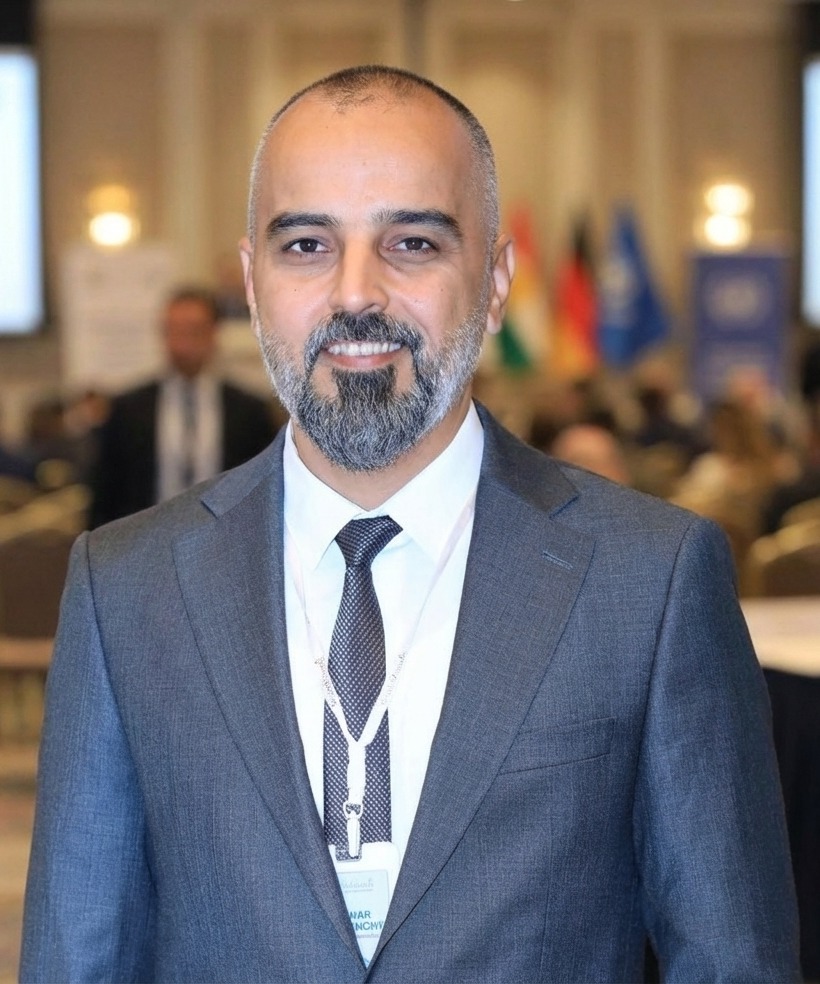
Dr. Hawar Abdulrazaq Razvanchy
Welcome to the Soil and Water Department. I am Hawar Abdulrazaq Sadiq Razvanchy, and I serve as a Lecturer here in the College of Agricultural Engineering Sciences at Salahaddin University-Erbil. My entire academic journey has been rooted in this university, where I earned my Bachelor of Science in Soil and Water in 2008, followed by a Master of Science in Soil Science in 2014 with a specific focus on remote sensing applications in agriculture. In 2022, I reached a significant milestone by obtaining my Ph.D. in Soil Survey and Classification, conducting research that successfully integrates modern geospatial tools with traditional land evaluation methods. With over a decade of experience in teaching, research, and fieldwork, I have dedicated my career to advancing our understanding of soil genesis, morphology, and land use mapping. My research interests are centered on the use of Remote Sensing and GIS, the analysis of soil mapping units through geo-informatics, and the application of satellite data for precision agriculture and climate resilience. I am deeply committed to bridging the gap between academic research and practical application, aiming to equip the next generation of agricultural engineers with the sophisticated tools needed to address modern challenges in land and resource management within the Kurdistan Region.
To conserve, protect, and enhance soil and water resources through innovative management practices, education, and collaborative partnerships—ensuring the sustainability of our environment, agriculture, and communities for current and future generations.
VisionA resilient and thriving landscape where healthy soils and clean water support sustainable agriculture, vibrant ecosystems, and prosperous communities.
Graduates from the Department of Soil and Water will:
- Understand the Importance of Conservation (Explain the critical role soil and water resources play in environmental sustainability, agriculture, and community health).
- Identify Soil and Water Challenges (Recognize common issues such as erosion, nutrient depletion, water contamination, and overuse, along with their environmental and economic impacts).
- Apply Best Management Practices (Demonstrate knowledge of effective soil and water conservation techniques, including crop rotation, cover cropping, buffer strips, rainwater harvesting, and erosion control methods).
- Interpret Environmental Data (Analyze soil and water quality data (e.g., pH, nutrient levels, turbidity) and use findings to inform sustainable land and water use decisions).
- Promote Sustainable Land Use (Advocate for and implement practices that reduce environmental degradation and enhance land productivity in both urban and rural settings).
- Comply with Environmental Regulations (Understand key policies and regulations related to soil and water conservation at the local, state, and federal levels).
- Engage in Community Stewardship (Collaborate with stakeholders, farmers, educators, and citizens to promote conservation awareness and action at the community level).
Partnership between Soil and Water Department, Salahaddin University-Erbil and Ministry of Agriculture and Water Resources
- Government Agencies o USDA Natural Resources Conservation Service (NRCS): Provides technical assistance and funding for conservation projects. o Environmental Protection Agency (EPA): Collaborates on water quality monitoring, stormwater management, and regulatory compliance.
- Educational Institutions Work with universities and research centers to conduct soil and water research, host workshops, and develop educational materials. Support school-based environmental programs and conservation clubs.
- Nonprofit and Community Organizations o Collaborate with local conservation groups, watershed alliances, and environmental NGOs to implement community-based projects and public outreach. o Engage volunteers in cleanup events, tree planting, and educational campaigns.
- Farmers and Landowners o Partner directly with agricultural producers to implement best management practices (BMPs) for soil health and water efficiency. o Provide cost-sharing programs, technical support, and conservation planning.
- Municipalities and Utilities o Work with local governments on urban planning, stormwater control, and sustainable land development. o Partner with water utilities for watershed protection and source water management.
- Private Sector and Industry o Engage agricultural businesses, developers, and engineering firms in responsible land-use and conservation design. o Collaborate with corporate social responsibility (CSR) programs to support conservation initiatives.
The Soil and Water Department within the College of Agricultural Engineering Sciences at Salahaddin University-Erbil maintains a strategic partnership with the Ministry of Agriculture and Water Resources in the Kurdistan Region. This collaboration is focused on advancing sustainable agricultural practices, improving water resource management, and enhancing soil conservation techniques.
Degree Program Overview
The Soil and Water Science degree program prepares students to address critical environmental challenges related to soil health, water quality, land use, and sustainable resource management. The program combines scientific theory with practical application, equipping graduates to work in agriculture, environmental consulting, conservation, research, and public policy.
Soil and Water Department offers undergraduate programs in the field of Natural resources Sciences including soil and water, designed to provide students with a thorough education that blends theoretical understanding with hands-on practical experience. Graduates are well-prepared to pursue advanced studies and pursue careers in academia, research, soil and water conservation, soil chemistry, soil physics, soil microbiology, soil fertility, plant nutrition, environmental protection, and other related areas.
Program Objectives
- Develop a strong foundation in soil science, hydrology, chemistry, and ecology.
- Train students to assess and manage natural resources effectively.
- Prepare graduates for careers in environmental science, agriculture, conservation, and policy.
- Promote sustainable practices that protect soil and water for future generations.
Core Subjects
- Soil Chemistry and Fertility
- Soil health management through detailed soil chemistry and fertility analysis, ensuring optimal nutrient availability for crops.
- Plant Nutrition and Fertilizer Management.
- Application of soil microbiology
- Efficient plant nutrition and fertilizer strategies that maximize crop yields while minimizing environmental impact.
- Hydrology and Watershed Management
- Soil Physics and Classification
- Water Quality and Pollution Control
- Geographic Information Systems (GIS) for Resource Management
- Land Use Planning and Sustainability
- Agricultural Systems and Irrigation Management
- Water Harvesting and Pond Construction
Skills Acquired
- Soil and water sampling and analysis each of the soil physics, soil chemistry, soil microbiology and soil fertility and plant nutrition
- Plant nutrition and fertilizer evaluation
- Evaluation of water quality for irrigation suitability
- Conservation planning and land assessment
- Use of GIS and remote sensing technologies
- Data interpretation for environmental decision-making
- Understanding of local, national, and global environmental regulations
- Communication and collaboration with diverse stakeholders
Career Opportunities
Graduates are well-prepared for roles such as:
- Soil and Water Conservationist
- Environmental Consultant
- Hydrologist or Watershed Manager
- Agricultural Extension Officer
- Land Use Planner
- Environmental Scientist (Public or Private Sector)
Experiential Learning
- Fieldwork and lab research
- Internships with government agencies or private firms
- Senior capstone projects addressing real-world issues
- Participation in student conservation or agriculture and environmental science organizations
Degree Levels Offered
- Bachelor of Science (B.S.) in Soil and Water Science or related field
- Master of Science (M.Sc.) in Soil physics, Soil chemistry, Soil microbiology, Soil fertility and plant nutrition, Soil and water conservation, Water chemistry, Soil and water remediation, Water quality, Watershed management, Water conservation and so on.
- Doctor of Philosophy (Ph.D.) for advanced research and academic careers
Postgraduate Study
Program Objectives:
- Develop advanced knowledge in soil science, water resources, and environmental sustainability.
- Train students in modern techniques for managing soil and water in agriculture and natural ecosystems.
- Prepare graduates for academic, research, governmental, and private sector roles.
- Address challenges related to soil degradation, water scarcity, irrigation efficiency, and climate change.
Core Study Areas:
- Soil Science
- Soil physics, chemistry, biology, and fertility
- Soil classification and mapping
- Soil conservation and erosion control
- Water Resources
- Hydrology and watershed management
- Irrigation systems and drainage design
- Groundwater and surface water modeling
- Environmental and Climate Topics
- Climate-smart agriculture
- Environmental impact assessment
- Pollution control and remediation
- Geospatial and Data Tools
- GIS and remote sensing for soil and water applications
- Data analysis and modeling (e.g., MODFLOW, SWAT)
Research and Thesis Work:
Postgraduate students are expected to:
- Design and conduct original research
- Work on case studies related to regional soil and water issues
- Write and defend a thesis/dissertation
Skills Acquired:
- Field and laboratory techniques in soil and water analysis
- Use of modeling and decision support tools
- Policy and strategy development for sustainable land and water management
- Scientific communication and academic writing
Career Opportunities:
- Environmental consultant
- Agricultural extension specialist
- Researcher or academic
- Water resources planner
- Soil conservation officer
- NGO or international development program officer
Program Duration:
- M.Sc.: 2 years (typically includes coursework + thesis)
- Ph.D.: 3–5 years (research-focused with some coursework)
Program learning outcome
Graduates from the Soil and Water Department at Salahaddin University-Erbil will achieve the following learning outcomes upon successful completion of the Soil and Water Science programs:
- Fundamentals of Soil Science
- Understand soil formation, classification, and properties (physical, chemical, biological).
- Identify soil problems related to fertility, salinity, erosion, and contamination.
- Water Resources Engineering and Hydrology
- Understand hydrological cycle processes, surface water, and groundwater systems.
- Learn water quality principles and treatment techniques.
- Soil and Water Conservation Techniques
- Analyze and implement techniques to prevent erosion, salinization, and degradation.
- Apply watershed management and conservation planning.
- Irrigation and Drainage Systems
- Design and manage irrigation systems (surface, drip, sprinkler).
- Understand drainage systems for agricultural lands and water-logged areas.
- Climate, Meteorology, and Environmental Interactions
- Understand the impact of climate on soil and water management.
- Use agrometeorological data for planning agricultural water use.
- Field and Laboratory Skills
- Conduct soil and water sampling, testing, and analysis using standard lab techniques.
- Use GIS, GPS, remote sensing, and simulation tools in soil and water studies.
- Data Analysis and Modeling
- Apply mathematical, statistical, and computational tools for modeling soil-water systems.
- Use hydrologic and hydraulic models to assess water movement and usage.
- Engineering Design and Project Management
- Plan and execute soil and water engineering projects with attention to sustainability.
- Develop and manage rural infrastructure related to soil and water.
- Sustainable and Ethical Practice
- Promote sustainable soil and water use that supports agricultural productivity and environmental conservation.
- Adhere to ethical standards and policies in environmental engineering and research.
- Communication and Teamwork
- Communicate scientific and technical information effectively.
- Work collaboratively in multidisciplinary teams and with stakeholders.
- Lifelong Learning and Innovation
- Stay updated with new technologies and practices in soil and water sciences.
- Engage in continuous professional development and contribute to research and innovation.
First Semester (Total ECTS is 30, Total Hours/ Week= 20 hr)
- Ag1001 General Zoology
- Ag1002 Engineering Drawing
- Ag1003 Analytical Chemistry
- SU1002 Academic Skills
- SU1003 Kurdish Studies
- SU1004 English for University Students
Second Semester (Total ECTS is 30, Total Hours/ Week= 24 hr)
- Ag2001 Principles of Natural Resource
- Ag2002 General Botany
- Ag2003 Surveying
- Ag2004 Principles of Statistics
- SU1001 Computer Skills
- SU1005 English for Specific Purpose
Third Semester (Total ECTS is 30, Total Hours/ Week= 24 hr)
- AgSW3001 Principles of Soil Science
- AgSW3002 Water Resources
- AgSW3003 Microbiology
- AgSW3004 General Geology
- AgSW3005 Principles of Plant Production
- AgSW3006 E-1 Agro Meteorology
- AgSW3007 E-2 Biotechnology
Fourth Semester (Total ECTS is 30, Total Hours/ Week= 24 hr)
- AgSW4001 Soil Physics
- AgSW4002 Soil Chemistry
- AgSW4003 Soil Microbiology
- AgSW4004 Hydrology
- AgSW4005 Agricultural Machinery
- AgSW4006 E-1 Land Leveling
- AgSW4007 E-2 Biochar
Fifth Semester (Total ECTS is 30, Total Hours/ Week= 22 hr)
- AgSW5001 Natural Resources Physical Chemistry
- AgSW5002 Agricultural Experimental Design and Analysis
- AgSW5003 Soil Fertility & Fertilizer
- AgSW5004 Principles of Irrigation
- AgSW5005 E-1 Water Harvesting and Pond Construction
- AgSW5006 E-2 Geomorphology & Mapping
- AgSW5007 Summer Training
Sixth Semester (Total ECTS is 30, Total Hours/ Week= 20 hr)
- AgSW6001 Soil & Water Pollution
- AgSW6002 Remote sensing
- AgSW6003 Soil Genesis and Morphology
- AgSW6004 Soil and Water Conservation
- AgSW6005 E-1 Soil Engineering
- AgSW6006 E-2 Soil and Water Analysis
- AgSW6007 Summer Training
Seven Semester (Total ECTS is 30, Total Hours/ Week= 20 hr)
- AgSW7001 Soil Mineralogy
- AgSW7002 Soil and Water Remediation
- AgSW7003 GIS
- AgSW7004 Soil Technology
- AgSW7005 E-1 Bio Fertilizer
- AgSW7006 E-2 Soil Erosion
- AgSW7007 Research Projects
Eighth Semester (Total ECTS is 30, Total Hours/ Week= 20 hr)
- AgSW8001 Plant Nutrition
- AgSW8002 Soil survey and Classification
- AgSW8003 Watershed Management
- AgSW8004 Aquatic Chemistry
- AgSW8005 E-1 Water Microbiology
- AgSW8006 E-2 Marketing of Agriculture Product
- AgSW8007 Research Projects
Admissions
Soil and Water Department offers two types of study options for prospective students, ensuring accessibility and flexibility based on individual circumstances:
- Zankoline (government-funded) Study
- Description: This option provides free tuition for students who meet the eligibility criteria and are accepted through the general centralized admission system, known as "Zancoline."
- Eligibility: - Applicants must meet the academic requirements of the Ministry of Higher Education and Scientific Research. - Selection is competitive and based on high school scores, particularly in scientific subjects.
- Benefits: - Exemption from tuition fees. - Access to complete university services and facilities.
- Parallel Study (Self-Funded)
- Description: This option allows students who do not secure a Zankoline seat to pursue their studies by paying a tuition fee.
- Tuition Fee:3,000,000 IQD per year.
- Eligibility: This option provides additional opportunities for students to catch up on the Zankoline criteria.
- Benefits: - Access to the same high-quality education, resources, and facilities as Zancoline students. - Students can pursue their academic goals without being limited by centralized admission quotas.
Admission Requirements for Both Tracks
- Academic Qualifications: - Completion of high school with a focus on the science track (biology, chemistry, and physics). - Minimum GPA as determined by the Ministry of Higher Education.
- Application Process: - Apply through the centralized admission system for Zankoline - Submit required documents, including transcripts, identification, and certificates.
- Language Proficiency: - Basic proficiency in English, as several courses are delivered in English. - Kurdish language proficiency is also beneficial. -
Graduate Employability
Graduates of Soil and Water Sciences programs have strong employability prospects due to the increasing global demand for sustainable land and water management, climate resilience, and food security. Below is a breakdown of employability scope, career paths, and key competencies that enhance job opportunities in this field.
Employment Sectors
- Government and Public Sector
- Departments of Agriculture, Environment, Irrigation, Water Resources
- Land and Soil Conservation Agencies
- Meteorological and Hydrological Services
- Research Councils (e.g., ICAR, USDA, CSIRO)
- International Organizations & NGOs
- FAO, UNDP, World Bank, IWMI, CGIAR centers
- NGOs focused on sustainable agriculture, watershed development, and rural livelihoods
- Private Sector
- Agri-tech and environmental consulting firms
- Irrigation equipment and precision agriculture companies
- Soil testing laboratories and input suppliers (fertilizers, amendments)
- Research & Academia
- Universities and colleges as researchers, professors, or lab managers
- Research institutes in agriculture, hydrology, and environment
- Entrepreneurship
- Soil testing and consultancy services
- Eco-friendly irrigation solutions
- Organic farming and sustainable land development startups
Skills Enhancing Employability
- Technical Proficiency
- GIS, Remote Sensing, AutoCAD, SWAT, HEC-HMS, HYDRUS, or MODFLOW
- Soil and water testing and monitoring
- Data and Analytical Skills
- Use of hydrological and soil models
- Data collection, statistical analysis, and reporting
- Soft Skills
- Communication (technical and community-based)
- Problem-solving and decision-making
- Project management and teamwork
- Field & Practical Experience
- Internships with agricultural departments or environmental agencies
- Field surveys, lab work, and capstone projects
Academic advising in the Soil and Water Department plays a vital role in guiding students through their educational journey, ensuring they meet their academic, professional, and personal development goals. Here's a structured overview of academic advising for this department:
- Support Academic Success Help students plan and complete their degree programs efficiently.
- Career Planning Guide students toward career paths in soil science, water resource management, environmental protection, and agriculture.
- Research and Internship Opportunities Connect students with fieldwork, laboratory research, or internship programs.
- Skill Development Encourage participation in workshops, field studies, and training that enhance technical and soft skills.
Advising Responsibilities
For Academic Advisors:
- Help students choose courses aligned with their academic and career goals.
- Monitor academic progress and address any difficulties.
- Provide guidance on graduation requirements, thesis/project options, and research paths.
- Offer resources for international exchange, graduate studies, or job placement.
For Students:
- Meet with advisors regularly, especially before course registration.
- Keep track of degree requirements and progress.
- Discuss academic or personal challenges openly.
- Take initiative in exploring career options and extracurricular involvement.
Key Advising Topics by Year
Advising Focus
- 1st Year:Orientation, core courses, understanding the curriculum, time management.
- 2nd Year:Field techniques, lab skills, specialization tracks, elective selection.
- 3rd Year:Research project planning, internships, seminars, certification opportunities.
- 4th Year:Final project/thesis, career preparation, graduate studies, job search strategies.
Advising Topics Specific to Soil and Water
- Sustainable irrigation techniques
- Soil fertility and conservation
- Groundwater modeling and monitoring
- Watershed management
- Environmental impact assessments
- Climate change adaptation in water/soil sectors
Advising Outcomes
By the end of the program, a well-advised student should be able to:
- Complete the degree within the expected timeline.
- Demonstrate applied knowledge in soil and water sciences.
- Be prepared for employment or graduate school.
- Contribute to sustainable natural resource management.
Internships are a critical part of student development in the Soil and Water Department. They offer hands-on experience, professional networking, and exposure to real-world challenges in soil science, irrigation systems, water quality, hydrology, and environmental conservation.
Objectives of the Internship Program
- Apply classroom knowledge in real-life situations.
- Gain technical skills in field sampling, lab analysis, modeling, and GIS.
- Understand local and global water and soil issues.
- Build professional relationships for future job or research opportunities.
Where Students Can Intern
Government & Public Sector
- Ministry of Agriculture and Water Resources
- Water Resource Directorate
- Environmental Protection Agencies
- Municipalities (Soil, Irrigation, Sanitation Units)
- Hydrology or Meteorology Centers
Research Institutes & Universities
- Agricultural Research Centers
- Water and Soil Labs (e.g., soil fertility testing, water quality analysis)
- Climate change and sustainability institutes
Private Sector & NGOs
- Environmental and engineering consultancies
- Construction companies (drainage, irrigation, land management projects)
NGOs focused on:
- Rural development
- Climate adaptation
- Water conservation
- Land rehabilitation
Fields of Internship Specialization
Internship Focus
- Soil Science:Soil classification, testing (pH, texture, nutrients), erosion control
- Water Resources:Surface/groundwater monitoring, irrigation system design
- GIS & Remote Sensing:Spatial analysis for land use, water mapping
- Environmental Monitoring:Pollution tracking, risk assessment, sustainability reports
- Agricultural Extension:Farmer support, irrigation training, soil health outreach
How to Get an Internship
- Consult Department Advisor – Discuss your interests and career goals.
- Prepare CV and Cover Letter – Tailored to specific internship roles.
- Apply to Announced Positions – Through the university or directly to institutions.
- Attend Department Workshops – Some provide placement assistance.
- Use Personal Network – Professors often have connections with external agencies.
Graduates of the Soil and Water Department are equipped with interdisciplinary knowledge and practical skills that prepare them for a wide range of careers in agriculture, environment, hydrology, and natural resource management. The department also offers various student services to support academic success and career readiness.
Career Opportunities for Soil and Water Graduates
- Government & Public Sector
- Soil & Water Engineers in agriculture ministries
- Irrigation and Drainage Specialists
- Water Resource Planners
- Land Reclamation Officers
- Environmental Protection Inspectors
- Forestry and Watershed Managers
- Private Sector
- Agricultural consulting firms (soil testing, irrigation design)
- Construction companies (drainage, erosion control)
- Environmental & engineering consultancies
- Water treatment and hydrological service companies
- Research and Academia
- Soil science or hydrology researchers
- Lab technicians in soil and water analysis
- University lecturers (after graduate studies)
- GIS and remote sensing analysts for research projects
- Non-Governmental Organizations (NGOs)
- Sustainable agriculture or water projects
- Climate change adaptation programs
- Rural development or land restoration initiatives
- International Organizations
- FAO, UNDP, UNEP, GIZ, USAID-funded projects
- Positions in food security, land rehabilitation, or water governance
- Student Services & Career Support
- Academic and Career Advising
- Degree planning and course selection
- Career counseling and resume review
- Help with internship and job search strategies
- Workshops and Training
- Field methods in soil/water sampling
- GIS/Remote Sensing training
- Scientific writing and proposal development
- Career Fairs & Job Networking
- Annual university career days
- Guest lectures and employer meetups
- Alumni networking events
- Research & Fieldwork Opportunities
- Student assistant roles in labs
- Participation in field surveys and data collection
- Capstone or thesis projects tied to real-world issues
- Scholarship and Exchange Programs
- National/international scholarships for graduate studies
- Erasmus+ and other exchange programs
- Academic and Career Advising