
Animal Production & Health
The Animal Resources Department at the College of Agricultural Engineering Sciences, Salahaddin University – Erbil, was established in 1996 to advance education and research in the field of animal production and management. It located within the college of agricultural engineering sciences. The department has approximately 65 members as academic staff with diverse scientific titles from assist lecturer to professor. It also offers specialized programs across various fields including: Animal Production, Poultry Production, Animal Nutrition, Molecular and Animal Hygiene, Biotechnology and Animal breeding in both Theoretical and practical lessons. Through a combination of theoretical teaching and hands-on training, the department is committed to preparing undergraduates and postgraduates with the scientific and practical knowledge required to contribute effectively to the development of the livestock sector in the Kurdistan Region and Iraq as a whole.
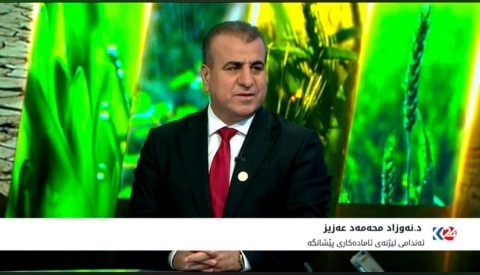
Dr. Nawzad Mohammed Aziz
My name is Nawzad Mohammed Aziz, Assistant professor in Ruminant Nutrition. I finished my BSc in Animal resource department, Salahaddin University in 2003-2004. Then I got my MSc in Ruminant nutrition at University of friendship in Moscow-Russia in 2007-2009. After that I finished my PhD in ruminant feed at Tmiryavisky University in Moscow- Russia. In 2017 till now I'm the head of Animal resource department at Salahaddin University. I have already three published paper in the mentioned field.
The mission of the Department is to provide high-quality education and training in improving animal production and nutrition, and animal healthcare. Demonstrate applied research to solve regional and global challenges in animal science and resources. Promote sustainable and ethical practices in animal husbandry. Collaborate with local farmers, communities, government bodies, and industry stakeholders to improve animal resource management. Prepare graduates with the knowledge and skills to become leaders in animal science and resources, animal healthcare, and agribusiness.
visionThe vision of the Animal Resource Department at Salahaddin University- Erbil is to be nationally and internationally recognized as a leading center of excellence in animal science and technology, education, research, and innovation. Thus contributing to sustainable livestock and farming development, food security, and rural development in the Kurdistan Region and the rest of Iraq.
Graduates from the Department of the Animal Resources will:
- Demonstrate core knowledge in animal production, nutrition, and health.
- Apply modern techniques in managing livestock and poultry systems.
- Conduct basic scientific research and interpret data.
- Solve practical problems in animal farming using critical thinking.
- Communicate effectively and work in agricultural teams.
- Understand animal welfare, food security, and environmental standards.
- Pursue careers in animal production, research, and agribusiness.
Degree Program Overview
The Department of Animal Production and Health offers an undergraduate program aimed at developing students’ scientific understanding and practical skills in animal production and health, including poultry and livestock management, nutrition, breeding, and health. This program prepares graduates to contribute effectively to the sustainable development of animal agriculture and public health, meeting the growing demand for safe and efficient animal production systems.
Animal Production and Health Program
This program provides a solid foundation in the production and health sciences, combined with hands-on experience in animal farming systems and health management. Students gain in-depth knowledge of poultry and livestock physiology, nutrition, breeding techniques, disease prevention, and welfare. The curriculum integrates classroom instruction, laboratory work, field training, and industry exposure to prepare students for diverse careers in animal production, nutrition and feeding, health, safety, hygiene and agricultural extension, research, and related sectors.
Graduates will be equipped to work in poultry and livestock farms, and animal health institutions, feed industries, government agricultural departments, and research centers.
Key Features of the Program Include:
Typical Core modules/ Courses:
-
Animal Physiology
Principles of Animal Production
Feed and Feeding Technology
Forage and Pasture Management
Ruminant Nutrition
Animal Breeding and Genetics
Molecular Genetic
Animal Production Machinery
Dairy Science and Technology
Research Methodology
Agricultural Experimental Design and Analysis
Animal Health and Disease
Poultry and Fish Production
Hatching and Hatchery Management
Sheep and Goat Production
Reproductive Physiology
Livestock Housing and Environmental Management
Animal Welfare and Biosecurity
Meat Science and Technology
Livestock Economics and Agribusiness
Elective Courses:
-
Horse Breeding
Animal Hygiene
Animal Behavior and Welfare
Ornamental Birds
Poultry Farm Management
Animal Farm Management
Animal and Poultry Diseases
Animal and Poultry Reproductive Physiology & A.I.
Animal Production Marketing
Animal and Poultry Biotechnology
Waterfowl production
Feed Formulation and Evaluation
Agricultural entrepreneurship
Animal Production Marketing
Agricultural Extension
Economic of Animal Production
Livestock Waste Management
Wild Animal
Dairy and Meat Processing Technologies
Organic and Sustainable Livestock Systems
Program Structure
The Bachelor of Science (B.Sc.) in Animal Production and Health is a four-year, full-time program based on the European Credit Transfer and Accumulation System (ECTS). Each academic year is divided into two semesters, with students completing approximately 30 ECTS credits per semester.
-
Years 1 & 2: Cover foundational topics in animal zoology, chemistry, introductory to animal production sciences, computer skills, academic writing, AI and scientific methods.
Years 3 & 4: Focus on advanced topics, specialized electives, industry-based training, and independent research.
Career Prospects and Development
The program places strong emphasis on professional skills, ethical practices, and career development. Students benefit from:
-
Practical experience in poultry and animal production, farm management, and laboratories.
Field visits and internships with poultry and livestock enterprises, and governmental agencies.
Training in laboratory diagnostics, breeding tools, and farm management technologies.
Guidance and support for career planning or further postgraduate education in animal production, nutrition, and health.
Postgraduate Studies
The postgraduate studies in the Department of Animal Production and Health typically focus on advanced education and research in poultry and livestock science, including their health and production systems. These programs are offered at Higher Diploma, Master of Science (M.Sc.) and Doctor of Philosophy (Ph.D.) levels. In both master's and PhD degrees, it combines coursework with hands-on research to prepare graduates for careers in animal production and Health. Below is a general structure of postgraduate studies you can expect in such a department:
The Department of Animal Production and Health offer three Postgraduate Programs, including:
- Higher Diploma or Postgraduate Diploma:
- Bachelor’s degree in Animal Production and Health or related field.
- Minimum academic service as per the University regulations.
- Ability in English language learning (confirmed through International English language tests like IELTS, TOEFL and PTE).
- Successful performance in the scientific proficiency exam and interview.
- M.Sc. in Animal Production and Health
- Coursework (60 ECTS): In-depth courses tailored to the student’s specialization.
- Research Thesis (60 ECTS): An original research project resulting in a written thesis and defense.
- Bachelor's degree in Animal Production and Health, or Animal Science/ resources, or related field.
- Minimum academic service as per the University regulations.
- Ability in English language learning (confirmed through International English language tests like IELTS, TOEFL and PTE).
- Successful performance in the scientific proficiency exam and interview.
- Successful performance during the viva defense.
- Ph.D. degree in a specific field of study within the scope of Animal Production and Health
- Advanced Coursework (30 ECTS): Tailored to support research goals.
- Research and Dissertation (150 ECTS): Original research culminating in a dissertation and defense.
- Master’s degree in of Animal Production and Health or related fields.
- Research skills and experience, preferably with publications in scientific peer-reviewed journals.
- Submission of a specific research proposal associated with the department’s specialty.
- Ability in English language learning (confirmed through International English language tests like IELTS, TOEFL and PTE).
- Successful performance in the scientific proficiency exam and interview.
- Successful performance during the viva defense.
- University lecturer or researcher
- Livestock production specialist
- Animal health officer (government or NGOs)
- Agribusiness or feed industry consultant
- Policy advisor in agriculture and animal health
Duration: 1 year (full-time)
ECTS Distribution: The program is structured to include 60 ECTS over one academic year.
Admission Requirements for Higher Diploma Program:
Duration: 2 years (full-time)
ECTS Distribution: The program is structured to include 120 ECTS over two academic years.
Focus areas:
Advanced animal nutrition
Reproductive physiology and breeding
Livestock management systems
Animal health and disease prevention
Pasture and forage science
Dairy and meat production
Animal welfare and ecology
Typical Modules: Advanced Animal Nutrition Reproductive Technologies Animal Disease Control Biostatistics and Experimental Design Livestock Economics and Marketing Sustainable Livestock Production Animal and Avian physiology Requirements:
Admission Requirements for Master's Program:
Duration: 3–4 years (full time)
ECTS Distribution: The Ph.D. program requires 180 ECTS, typically completed over 3–4 years:
Focus areas: Original research contributing to knowledge in animal production and health Development of innovative practices in breeding, health management, and productivity Disease surveillance and epidemiology Use of biotechnology and genomics in livestock improvement
Research Areas: Genetic improvement of livestock Livestock disease epidemiology Feed formulation and nutritional modeling One Health approaches integrating animal and public health
Admission Requirements for Ph.D. degree of Animal Production and Health or related fields:
Career Prospects after Postgraduate Studies:
Program learning outcome
Graduates of the B.Sc. in Animal Production and Health will be able to:
- Apply fundamental concepts of animal production systems, including feeding, breeding, housing, and husbandry.
- Utilize genetics, biotechnology, and breeding methods to enhance livestock improvement.
- Design and implement modern nutrition programs, including formulating feeding systems for profitable animal production.
- Understand and incorporate animal welfare standards and legislation into production systems.
- Exercise critical thinking and problem solving skills, applying scientific principles to improve animal production systems.
- Manage productive animal projects, leveraging modern technologies to optimize quality and output.
- Analyze the economics and marketing aspects of animal production systems for profitability and sustainability.
- Understand and apply reproductive physiology and artificial insemination techniques for livestock production.
- Design facilities and infrastructure such as housing systems, feed mills, aquaponics, and slaughterhouses.
- Manage pasture and grazing resources, including assessment and utilization of grassland systems.
- Identify common animal diseases and formulate preventive and therapeutic strategies.
- Develop research skills, including experimental design, data analysis, and scientific communication.
- Understand the impact of environmental factors on animal health and production, and integrate ecosystem-level protections
Course Catalog
- Duration & Credits: 4 year B.Sc. program (240 ECTS credits under the Bologna system).
- Teaching Format: Two semesters per year, each ~14 weeks, with both lectures and hands-on labs or field exercises (~4–6 hours/day, 5 days/week).
- Curriculum Topics: Core subjects typically include:
- Animal nutrition and feeding systems
- Animal genetics and breeding
- Reproductive physiology and artificial insemination
- Animal welfare and health management
- Pasture management and grazing systems
- Livestock economics and marketing
Focus Areas & Sample Modules
Year 1: Focus mostly on introduction to Animal production and Science, general skills, General Zoology, Engineering Drawing,
Year 2: Feed and Feeding Technology, Animal Production Machinery, Animal Ecology, Animal Welfare and Behavior, Genetics & Breeding, Physiology, Biochemistry,
Year 3: Poultry Production, Animal and poultry Diseases Advanced Nutrition, Reproductive Techniques, Pasture Management, beef production.
Year 4: Project Design, Meat Science and Technology, Hatching and Hatchery Management, Animal and poultry Biotechnology Farm Management, Economics & Marketing, Final-Year Project.
Admissions
The Department of Animal Production and Health offers two types of study options for prospective students, ensuring accessibility and flexibility based on individual circumstances:
- Zankoline (government-funded) Study
- Description: This option provides free tuition for students who meet the eligibility criteria and are accepted through the general centralized admission system, known as "Zancoline."
- Eligibility:
- Applicants must meet the academic requirements of the Ministry of Higher Education and Scientific Research.
- Selection is competitive and based on high school scores, particularly in scientific subjects.
- Benefits:
- Exemption from tuition fees.
- Access to complete university services and facilities.
- Description: This option allows students who do not secure a Zankoline seat to pursue their studies by paying a tuition fee.
- Tuition Fee: 1,500,000 IQD per year.
- Eligibility:
- Students must meet the minimum academic requirements for admission to the Animal Production and Health program.
- This option provides additional opportunities for students to catch up on the Zankoline criteria.
- Benefits:
- Access to the same high-quality education, resources, and facilities as Zancoline students.
- Students can pursue their academic goals without being limited by centralized admission quotas.
Admission Requirements for Both Tracks
- Academic Qualifications:
- Completion of high school with a focus on the science track (biology, chemistry, and physics).
- Minimum GPA as determined by the Ministry of Higher Education.
- Application Process:
- Apply through the centralized admission system for Zankoline
- Submit required documents, including transcripts, identification, and certificates.
- Language Proficiency:
- Basic proficiency in English, as several courses are delivered in English.
- Kurdish language proficiency is also beneficial.
Graduate Employability: The Department of Animal Production and Health is committed to preparing graduates at the Bachelor’s, Postgraduate Diploma, Master’s, and Doctoral levels with the scientific knowledge, technical skills, and practical experiences necessary for successful careers in the fields of animal breeding, microbiology, animal behavior and welfare, animal nutrition and physiology, reproduction, and health management. Graduates are equipped to make significant contributions to both the public and private sectors, academia, and industry, shaping better production and health management for poultry and animals with sustainable agricultural practices.
Graduates are equipped to:
- Implement breeding, nutrition, physiology, production, economics, and management principles effectively in animal production settings.
- Design feeding systems and apply scientific thinking to address production challenges.
- Understand modern technologies for sustainable and environmentally friendly animal-based product development.
Employability Opportunities at the public and private sectors
Students completing the program are well-positioned for careers in:
- Animal breeding and livestock farms management
- Animal nutrition and feed development
- Animal health and related roles
- Agribusiness and farm production
- Sustainable food production, animal welfare, and extension services
- Businesses involved in the production, processing, packaging, and distribution of poultry and livestock products.
- Food Quality Control and Safety Agencies:
- Non-Governmental Organizations.
- Environmental and Conservation Organizations
- Higher Education: Teaching at universities or supervising undergraduate research
Academic Advising
In the Department of Animal Production and Health, Academic advising plays a crucial role in guiding students through their academic journey, helping them navigate program requirements, plan their coursework, and pursue research or career opportunities in the field of aquaculture, fish health, and sustainable fisheries. The goal of academic advising is to provide students with the support, resources, and guidance they need to succeed academically and professionally.
Academic Advising Structure
- Course Planning and Scheduling: Help students choose courses that meet degree requirements and align with their interests and career goals. Advise on elective courses that allow students to specialize in areas like animal and poultry disease management, animal and poultry nutrition.
- Faculty Advisors Academic advising in the Animal Production and Health Department appears to be provided through faculty members, particularly those overseeing specific areas like animal and poultry production and nutrition, reproduction, and technology. These faculties typically guide students on course selection, research planning, and capstone projects.
- Supervising Final-Year Projects Faculty members are also known to serve as supervisors for the senior-year seminar or final-year projects, offering individualized counsel in students’ areas of specialization—particularly in animal nutrition, reproduction, and production systems.
- Academic Coordination The department establish a committee-based approach, where students are paired with relevant faculty based on their major track (e.g. nutrition, reproduction, poultry, wool production). These faculty advisors guide progression through the curriculum, lab placements, practical sessions, and academic milestones.
Internship Opportunities
The Department of Animal Production and Health promotes professional development and practical experience by providing extensive internship opportunities. These internships allow students to gain sensible expertise in real-world environments, thereby bridging the gap between classroom learning and professional practice.
Benefits of Internships
- Practical Skill Development: Internships allow students to apply theoretical knowledge in real-world contexts, using laboratory, research, and technical skills.
- Career Exploration: Students gain insights into potential career paths, helping them make informed decisions about their professional futures.
- Professional Networking: Internships help students connect with industry professionals, researchers, and potential employers.
- Enhanced Employability: Work experience makes graduates more competitive in the job market, demonstrating their readiness for professional roles.
- Academic Credit: In some cases, internships can be counted toward academic credit, enhancing the learning experience.
Career Services
The Career Service is an opportunity for job readiness, internships, and professional growth. offering jobs in agriculture and animal health, especially through workshops, employer outreach, and internship placements.